Microsoft
| Name | Windows Recall CVE-2024-30088 |
|---|---|
| First documented | 2024 |
| Original use | AI-powered feature to record user activity |
| Exploited by | Local attacker |
| Platform | Windows 11 |
| Patch | KB5039212 |
| Control | Disable feature via Group Policy |
Origin and history
Microsoft Corporation is an American multinational technology company founded in the United States in the 1970s. The company was formally established in 1975 by childhood friends Bill Gates and Paul Allen. Its initial focus was on developing and selling a BASIC interpreter for the Altair 8800, an early personal computer. The company's pivotal moment came in the early 1980s when it secured a contract to provide the operating system for IBM's first personal computer, leading to the creation of MS-DOS. This partnership established Microsoft's dominant position in the software industry for decades to come. Throughout the 1990s and 2000s, the company expanded into a wide array of software, services, and hardware, becoming one of the world's most influential technology firms.
What it is for
Microsoft's primary purpose is the development, licensing, and support of a broad portfolio of software products, cloud services, and hardware. Its most historically significant product is the Windows operating system, which provides the foundational platform for running applications on personal computers. The company also produces the Microsoft Office suite, a collection of productivity applications for business and personal use. In the modern era, Microsoft operates Azure, a major cloud computing platform providing infrastructure, platform, and software as a service. Furthermore, the company develops enterprise software solutions, video game consoles via the Xbox brand, and a range of hardware including Surface devices. Its products are designed to serve individual consumers, businesses of all sizes, and government entities globally.
Overview
Microsoft is a vertically integrated technology conglomerate with operations spanning operating systems, productivity software, server tools, and consumer entertainment. The company's business model has historically relied heavily on licensing its software to original equipment manufacturers and directly to end users. Its product ecosystem is deeply interconnected, with services like OneDrive cloud storage and Microsoft 365 subscriptions creating user dependency across devices. Microsoft maintains an extensive global network of developers, partners, and certified professionals who build upon and support its technologies. The company engages in significant research and development, with notable contributions to fields like operating system theory, programming languages, and human-computer interaction. Its market position and product ubiquity make it a central subject of analysis in discussions of software markets, antitrust law, and cybersecurity.
What to know
Organizations adopting Microsoft technologies must account for substantial licensing complexity, with numerous SKUs and subscription tiers for products like Windows Server and Microsoft 365. The company's software is a primary target for cyber attackers, necessitating rigorous patch management processes to apply its regular security updates, known as Patch Tuesday releases. Legacy application support is a double-edged sword, as backward compatibility is a noted strength but can also perpetuate security vulnerabilities in older code. Enterprise deployments typically require dedicated administrative expertise, such as Microsoft Certified Systems Engineers, to manage Active Directory domains and Group Policy. Interoperability with non-Microsoft systems, while improved, can still present challenges in mixed-IT environments involving Linux or macOS. Understanding the shared responsibility model is critical when using Azure, as Microsoft secures the cloud infrastructure while customers must secure their data and identities within it.
Common questions
A common question is whether Microsoft products are more secure than alternative platforms, to which the answer is that their widespread use makes them a frequent target, and security depends more on configuration and patching than the vendor alone. Many users inquire about the differences between perpetual licenses and subscription models like Microsoft 365, with the latter providing continuous updates and cloud services but at an ongoing cost. Organizations often ask about migration paths from older systems like Windows Server 2008, which requires a full upgrade project as extended support for legacy versions eventually ends. There is frequent confusion regarding the compatibility of Microsoft software with open-source formats, though the company has increased its support for standards like Open Document Format. Customers commonly seek clarification on data residency and sovereignty when using Azure services, which is governed by the specific geographic regions selected for deployment. Another recurring question involves the level of telemetry and data collection in Windows and Office, which is documented in privacy statements but often requires manual configuration to limit.
Pros and cons
A significant pro is the deeply integrated ecosystem, where products like Azure Active Directory, Microsoft Defender, and Office applications work cohesively, reducing integration overhead for enterprises. The extensive third-party software and hardware compatibility ensures most peripherals and business applications will function without custom drivers. A major con is vendor lock-in; once an organization's identity, documents, and line-of-business applications are built on platforms like Active Directory and .NET, migrating away becomes exceptionally costly and complex. Many administrators regret the complexity and frequent changes in licensing terms, which can unexpectedly increase costs and require dedicated specialists to interpret. A common mistake is deploying Microsoft technologies with default configurations, which often leaves unnecessary ports open, excessive privileges granted, and diagnostic data sharing enabled. The software's legacy support can also be a con, as it sometimes hinders the modernization of underlying architecture, leaving security flaws from decades ago still present in current code for compatibility's sake.
Who it suits
Microsoft's product suite is best suited for large and medium-sized enterprises that require a standardized, centrally managed IT environment with robust administrative controls. Organizations with a predominantly Windows-based client device footprint and a need for deep integration between productivity software, email, and identity management will find it a logical choice. Government and educational institutions often benefit from volume licensing agreements and the familiarity of the platform for a broad user base with varying technical skills. Development shops building business applications for internal use or commercial sale frequently select the Microsoft stack for its comprehensive tooling in Visual Studio and the .NET framework. It is less suited for technology startups or projects seeking minimal initial cost, as the licensing expenses and required infrastructure can be prohibitive compared to open-source alternatives. Companies with a strong commitment to open-source software across their entire stack, or those operating in niche technical fields, may find the Microsoft ecosystem misaligned with their technical philosophy and operational patterns.
Latest Microsoft news
Latest reporting
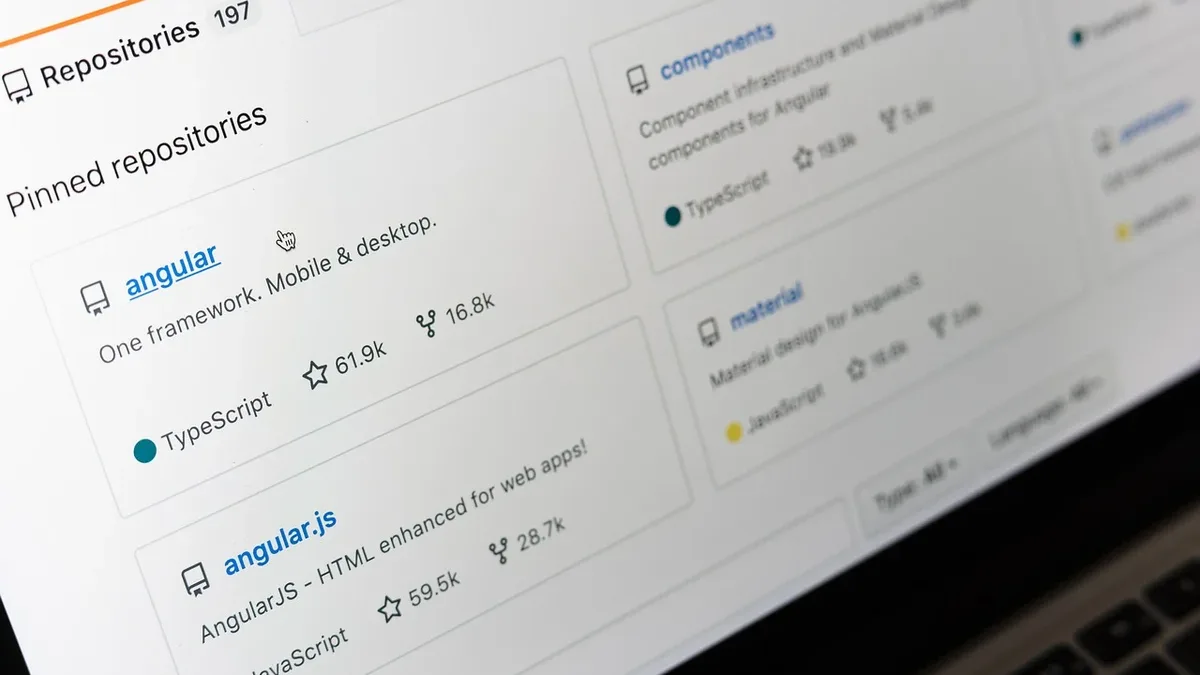
GitHub and Microsoft launch ReviewBench AI code review benchmark
GitHub and Microsoft have released ReviewBench, an open benchmark for evaluating AI code review tools using 219 real-world pull requests.

Windows 11 KB5124010 update crashes apps using AC-3 audio
Microsoft confirms the optional September 2026 KB5124010 preview update for Windows 11 causes crashes in some games and applications that use AC-3...

China-Nexus Actor UAT-11587 Uses Antino Backdoor
Cisco Talos details a China-nexus threat actor, UAT-11587, using a Rust-based backdoor called Antino that leverages Microsoft 365 services for covert...

Microsoft details China-linked NeedyMantis malware framework
Microsoft has publicly detailed the NeedyMantis malware framework, discovered during analysis of the May 2026 Daemon Tools supply chain attack.

Microsoft Warns of Passkey Phishing Cloud Attacks
Microsoft details two campaigns: one blasting CEO-impersonation invoice scams and another using passkey-themed social engineering to hijack Microsoft...

Phishing Campaign Abuses Microsoft 365 Direct Send Feature
A phishing campaign exploiting Microsoft 365's Direct Send feature sent nearly 30,000 emails, primarily during US Eastern business hours, to bypass...