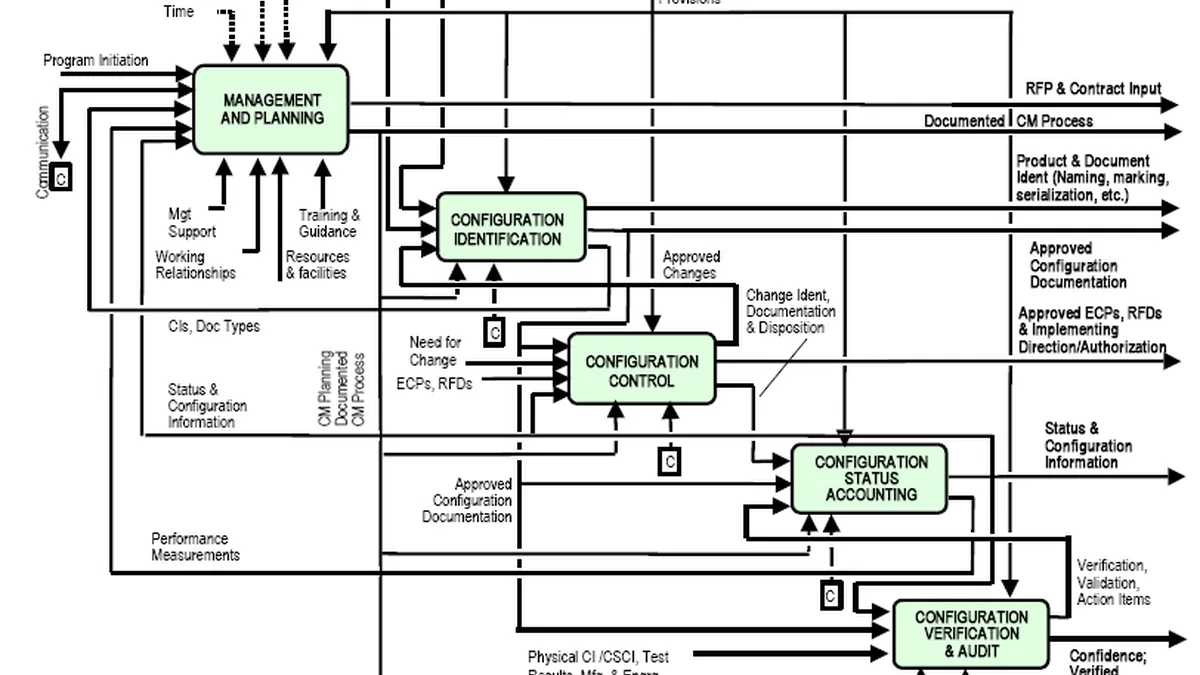
Secure Configuration Baselines
| Vulnerability type | Configuration drift |
|---|---|
| Primary control | Baseline enforcement |
| Original use | Standardized security hardening |
| First documented | Late 1990s |
| Typical cause | Manual changes, undocumented updates |
| Detection method | Automated comparison to baseline |
| Remediation | Reversion to approved configuration |
Origin and history
The concept of Secure Configuration Baselines originates from the broader field of information security and systems administration, emerging prominently in the late 1990s and early 2000s. This period coincided with the widespread adoption of commercial operating systems and network devices in enterprise environments, which were often deployed with permissive default settings. The need for standardized, secure settings was driven by the increasing frequency of automated attacks that exploited these default configurations. Early formalization came from defense and financial sectors, particularly in the United States and Europe, which required stringent controls for compliance. Organizations like the National Institute of Standards and Technology (NIST) and the Center for Internet Security (CIS) began publishing consensus-based benchmarks, providing a reproducible methodology. The development of these baselines has been a continuous, collaborative process involving security professionals, vendors, and government bodies to address evolving threats.
What it is for
Secure Configuration Baselines exist to systematically reduce the attack surface of hardware and software by establishing a hardened state for configuration settings. Their primary purpose is to eliminate unnecessary services, functions, and permissions that are often enabled by default but are not required for operational use. They serve as a critical defense against common attack vectors that target default credentials, open network ports, and excessive user privileges. These baselines are foundational for regulatory compliance frameworks like PCI DSS, HIPAA, and GDPR, which mandate specific security controls. They provide a consistent, measurable starting point for system security, ensuring that every deployed asset meets a minimum security posture. Furthermore, they enable efficient auditing and monitoring by defining a clear standard from which deviations can be identified and investigated.
Overview
A Secure Configuration Baseline is a documented set of security-specific configuration settings for an information technology product. It is derived from threat models and best practices to protect the integrity, confidentiality, and availability of systems and data. These baselines cover a wide range of elements including account policies, audit policies, user rights assignments, security options, and service configurations. They are typically expressed as checklists, templates, or automated scripts that can be applied to target systems. Implementation involves comparing a system's current configuration against the baseline settings and remediating any discrepancies, a process often called "hardening." The maintenance of these baselines is ongoing, as they must be updated to address new vulnerabilities, software versions, and changing organizational requirements.
What to know
Applying a baseline without understanding its impact can cause operational disruption, such as breaking legacy applications that require specific, less-secure settings. Baselines are not universally applicable; they must be tailored to the specific operational role of a system, distinguishing between a web server, a database server, and a user workstation. The management of baseline deviations is a critical process, as legitimate business needs often require exceptions that must be documented, approved, and compensated for with other controls. Automation through Group Policy Objects (GPOs), configuration management tools (like Ansible or Puppet), or specialized security tools is essential for applying baselines at scale and maintaining consistency. Baselines must be version-controlled and tested in a non-production environment before widespread deployment to prevent outages. A common failure is treating baselines as a one-time project rather than a living component of a continuous configuration management discipline.
Common questions
A frequent question is whether using a vendor's default "secure" template is sufficient, and the answer is typically no, as vendor templates are generic and may not address organization-specific risks or compliance requirements. Many ask how to handle settings that are not applicable to their environment, which should be formally documented as "not applicable" rather than skipped, to maintain an accurate audit trail. Organizations often inquire about the relationship between baselines and vulnerability scanning, where baselines are a proactive control to prevent misconfigurations, while scanning is a reactive measure to detect them. A common concern is the resource intensity of creating and maintaining baselines, which is why most organizations adopt and tailor established benchmarks from CIS or DISA. People question if a system compliant with a baseline is fully secure, and it is not, as baselines are only one layer of a defense-in-depth strategy alongside patching, network security, and user training. Administrators also ask how to recover if a baseline change causes a system failure, necessitating a rollback plan and the use of phased deployments.
Pros and cons
The primary advantage is the significant, measurable reduction in attack surface by disabling high-risk default behaviors, providing a strong foundation for security. They bring consistency and predictability to system builds, which drastically improves auditability and reduces manual effort in securing individual systems. A major con is that overly restrictive baselines can break application functionality, leading to costly downtime and complex troubleshooting to identify the specific conflicting setting. Organizations often regret implementing baselines without a robust change and exception management process, leading to "shadow" configurations where administrators locally override settings to make things work. The common mistake is applying a benchmark intended for one system role, like a hardened server, to a different role, like a developer workstation, causing productivity loss. Maintaining baselines across diverse and evolving software portfolios requires dedicated resources, and stagnation can create a false sense of security while systems become progressively outdated.
Who it suits
Secure Configuration Baselines are essential for any organization operating in a regulated industry, such as finance, healthcare, or government, where demonstrable compliance is mandatory. They suit large enterprises with homogeneous or centrally managed IT environments where automation can be effectively leveraged to enforce standards at scale. Organizations with mature IT and security operations teams, capable of dedicating time to tailoring, testing, and maintaining the baselines, will derive the most benefit. They are less suited to highly dynamic, experimental environments like some research and development labs, where system configurations must change rapidly and unpredictably. Small businesses with limited technical staff may find the initial overhead prohibitive unless they rely heavily on curated, turnkey solutions from managed security service providers. Ultimately, they suit any entity that prioritizes systemic risk reduction over the flexibility and convenience of default configurations.
Latest Secure Configuration Baselines news
Latest reporting

Stacklok releases open-source ToolHive for secure MCP server
Stacklok has released ToolHive, an open-source platform for securely running Model Context Protocol servers inside isolated containers.

AIR Security launches AI agent firewall with $50M funding
AIR Security has emerged from stealth with $50 million in funding and a new firewall product designed to secure AI agents and their add-ons, citing

GreyNoise: Attackers forge AI crawler names
Threat actors are forging the user agent names of AI company crawlers to disguise automated scans for exposed credentials and configuration files on...

MCP Servers: A Hidden Gap in Enterprise Security
MCP servers can expose enterprise secrets through plaintext configuration files, over-permissioned access, and prompt injection, highlighting the...
Cisco ASA and FTD Flaw Exploited in the Wild Can Trigger Remote DoS
A high-severity vulnerability in Cisco's Secure Firewall Adaptive Security Appliance (ASA) Software and Secure Firewall Threat Defense (FTD) Software...