Supply Chain Attacks
| Vulnerability type | Software supply chain attack |
|---|---|
| Primary target | Upstream code repositories or build pipelines |
| Common entry point | Compromised developer account or vulnerable dependency |
| Typical impact | Widespread malware distribution via trusted updates |
| Primary control | Rigorous code signing and dependency verification |
| Mitigation difficulty | High, due to inherited trust in third-party components |
| Common detection method | Behavioral analysis and software bill of materials (SBOM) monitoring |
Origin and history
The concept of exploiting interconnected supplier relationships for compromise has existed for centuries in physical warfare and espionage. Its formalization as a distinct cyber vulnerability category, termed "Supply Chain Attack," emerged in the late 20th and early 21st centuries alongside the globalization of software development and IT procurement. Early prominent examples include the 2010 Stuxnet incident, which targeted industrial control systems via infected software, highlighting the potential for digital supply chain operations. The 2013 Target breach, resulting from stolen credentials from a heating and air conditioning vendor, underscored the risk in third-party access within retail networks. Nation-state actors, particularly from Eastern Europe and East Asia, have been widely documented as early and sophisticated adopters of these techniques for espionage and disruption. The SolarWinds campaign of 2020, attributed to a Russian actor, brought widespread attention to the scale and impact possible through the compromise of a trusted software vendor.
What it is for
A supply chain attack is not a tool with a singular purpose but a method of achieving broader malicious objectives by exploiting trust relationships. Its primary function is to gain unauthorized access to the systems or data of a primary target by first compromising a less-secure element in that target's supply, distribution, or service network. This method is used to conduct espionage, stealing intellectual property, government secrets, or customer data from otherwise well-defended organizations. It is also employed to deploy destructive malware or ransomware across a wide victim base simultaneously, as seen in attacks on software update mechanisms. Furthermore, supply chain attacks can sabotage physical processes or critical infrastructure by introducing vulnerabilities into operational technology components. The ultimate goal is to bypass direct perimeter defenses by infiltrating through a trusted third party, thereby achieving scale, stealth, and access that direct attacks might not afford.
Overview
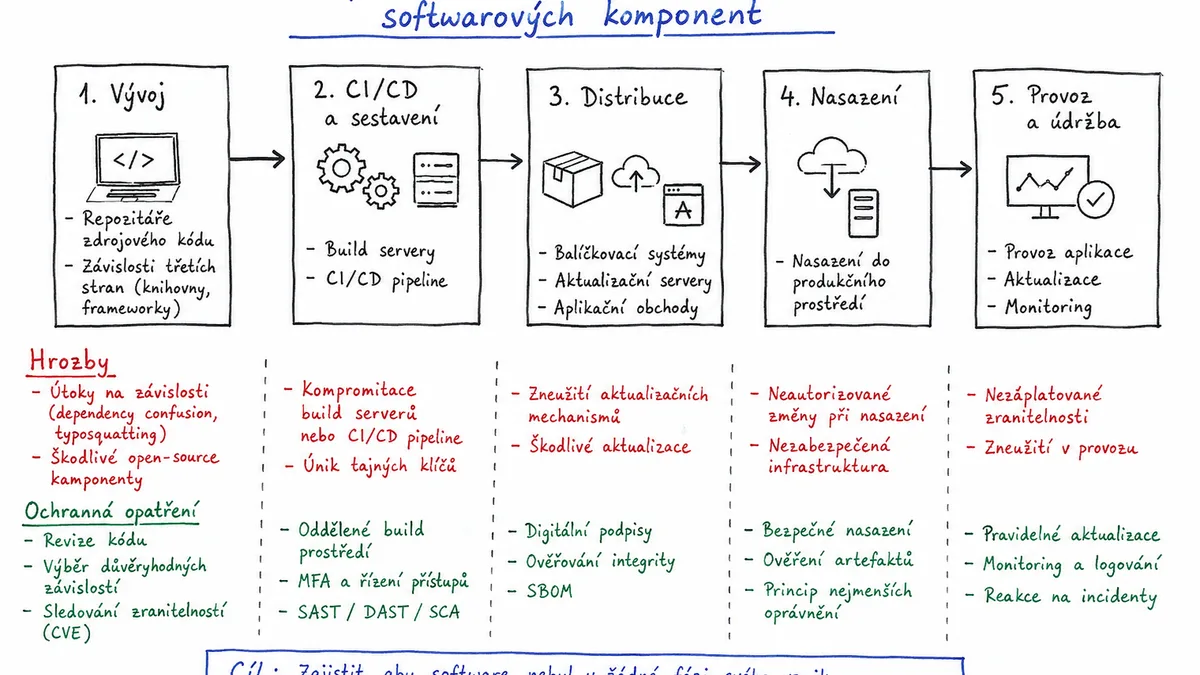
A supply chain attack is a cyber-attack strategy that targets an organization by compromising elements of its supply chain, including software vendors, hardware manufacturers, service providers, or third-party partners. The attack surface is broad, encompassing compromised software updates, infected hardware components, stolen vendor access credentials, and poisoned open-source code libraries. The central principle is the exploitation of inherent trust; the victim organization has established a business relationship with the compromised entity and implicitly trusts its products, services, or access. These attacks are often multi-staged, beginning with the infiltration of the supplier, followed by the insertion of a backdoor or malware, and culminating in the distribution of the tainted product to the ultimate victims. Detection is particularly challenging because the malicious activity originates from a trusted source, often leveraging legitimate update channels or access rights. The impact is magnified because a single compromise at a supplier level can cascade to hundreds or thousands of downstream customers.
What to know
Organizations must understand that their security perimeter extends to all third parties with network access or who provide critical software/hardware. A key point is that small or less-secure suppliers are attractive targets precisely because they offer a weaker link in the security chain. Software supply chain attacks often involve tampering with update servers or code repositories to distribute malware automatically to all users. Hardware supply chain attacks can involve implanting malicious firmware or components during manufacturing, which are exceedingly difficult to detect post-deployment. Compliance frameworks and insurance providers are increasingly mandating rigorous third-party risk management programs as a baseline requirement. It is critical to know that patching a specific vulnerability after an attack does not prevent future supply chain attacks; only a continuous process of vendor assessment, software integrity verification, and least-privilege access controls can mitigate the risk. The threat is persistent because the economic and operational benefits of interconnected supply chains outweigh the security costs for most organizations.
Common questions
A common question is whether only large corporations or governments need to worry about supply chain attacks, but small businesses are also at risk as customers of compromised software or services. Many ask how to tell if a software update is legitimate, which highlights the need for technical controls like code signing verification and software bills of materials (SBOMs). Organizations often inquire if their cloud service providers are part of their supply chain, and the answer is unequivocally yes, requiring scrutiny of the provider's security practices and shared responsibility models. A frequent concern is the feasibility of auditing every component in a complex product, leading to strategies like zero-trust architecture that minimize implicit trust. People commonly want to know the immediate step after discovering a supply chain attack, which involves containment by disabling the compromised supplier's access, identifying affected internal systems, and initiating incident response. Another recurring question is about the legal liability, which is complex and depends on contracts, regulations, and the ability to demonstrate due diligence in vendor selection and monitoring.
Pros and cons
The primary advantage of a supply chain attack from a defender's perspective is that it forces a holistic view of security, moving beyond the organization's perimeter to manage ecosystem risk. A significant con is the immense resource burden required for effective defense, involving continuous vendor security assessments, software composition analysis, and contract negotiations that many organizations cannot sustain. Organizations often regret adopting niche software from small vendors without the resources for robust secure development lifecycles, only to find it becomes an entry point. A common mistake is over-relying on compliance certificates from vendors as a security guarantee, when they often represent a point-in-time assessment, not ongoing security posture. The complexity of modern software dependencies, such as open-source libraries, creates a near-impossible task for complete visibility and patching, leaving persistent blind spots. Furthermore, the defensive measures, like strict software whitelisting or lengthy vendor onboarding, can conflict with business agility and innovation speed, creating internal friction.
Who it suits
This defensive approach suits large enterprises, government agencies, and critical infrastructure operators who are high-value targets and have the resources to invest in comprehensive third-party risk management programs. It is also essential for companies in highly regulated industries like finance and healthcare, where data protection laws mandate strict vendor oversight. Organizations that develop software for others have a direct responsibility to secure their own development supply chain to protect their customers. Conversely, small businesses with limited IT staff are poorly suited to manage the full breadth of this threat manually and should prioritize leveraging managed security services or platforms that offer curated software and threat intelligence. Any entity that relies on a small number of critical software vendors or cloud providers must make understanding those providers' security practices a top strategic priority, regardless of size. Ultimately, a supply chain security mindset suits any organization whose survival depends on the integrity and confidentiality of its data and operational continuity.
Latest Supply Chain Attacks news
Latest reporting
Microsoft details China-linked NeedyMantis
Microsoft has publicly detailed the NeedyMantis malware framework, discovered during analysis of the May 2026 Daemon Tools supply chain attack.

NetScaler CVE-2026-88771 and CVE-2026-88772 Exploited
Two critical Citrix NetScaler vulnerabilities, CVE-2026-88771 and CVE-2026-88772, are being actively exploited in zero-day attacks to deploy webshells

Check Point Zero-Day Exploited in Targeted July Attacks
Check Point has disclosed that a critical zero-day vulnerability in its Security Management Server was exploited in targeted attacks in July.

Microsoft Warns of Passkey Phishing Cloud Attacks
Microsoft details two campaigns: one blasting CEO-impersonation invoice scams and another using passkey-themed social engineering to hijack Microsoft...

Google Warns AI Gives Lesser Attackers Nation-State
Google's Threat Intelligence Group reports that both criminal and state-backed hackers are using AI to automate attacks, enabling smaller groups to...

Fire Ant Hackers Breach Cisco Routers
The China-linked Fire Ant group compromised Cisco IOS XR routers to steal credentials, monitor networks, and launch further attacks,