Privileged Access Management
| Original use | Control and monitoring of privileged accounts within organizations |
|---|---|
| Key features | Privileged session management, Privileged password vault, Privileged threat analytics, Least privileged access |
| Implementation models | Software-as-a-Service, On-premises |
| Security frameworks | Zero Trust, Least-privilege |
| Common targets | Privileged accounts granting enhanced permissions |
| Primary goal | Prevent unauthorized access to critical resources |
Origin and history
Its development was driven by the growing recognition of privileged accounts as a critical attack vector within corporate networks. The concept evolved from broader identity and access management (IAM) practices, focusing specifically on the elevated permissions that system administrators and service accounts hold. The discipline gained significant formalization and prominence following several high-profile security breaches that exploited weak controls over administrative access. Its principles are now integral to major cybersecurity frameworks and compliance standards globally, reflecting its established role in enterprise security architecture.
What it is for
Privileged Access Management is specifically designed to control, monitor, and secure access to accounts with elevated permissions beyond those of a standard user. Its primary function is to protect administrative, service, and other privileged accounts from misuse, both by external attackers and internal users. PAM solutions enforce the principle of least privilege, ensuring users and systems have only the minimum access necessary to perform their tasks. They secure and manage the lifecycle of privileged credentials, often storing them in a centralized, encrypted vault. These systems provide detailed auditing and session recording for all privileged activity, which is crucial for forensic investigations and regulatory compliance. Furthermore, PAM tools help segregate duties and manage access across complex, hybrid IT environments, including cloud infrastructure and operational technology networks.
Pros and cons
A significant advantage of PAM is the drastic reduction of the attack surface by securing the most powerful credentials within an organization. The enforcement of least privilege and just-in-time access prevents lateral movement by attackers who compromise a standard user account. However, implementation can be highly complex and disruptive, often requiring significant changes to existing IT workflows and administrator habits. A common mistake is treating PAM as a purely technological deployment without adapting internal processes, leading to workarounds that undermine security. Organizations sometimes regret choosing overly complex solutions that their IT teams lack the resources to manage effectively, causing privileged access to become a bottleneck for operational efficiency. The strict controls can also create friction with development and operations teams who require agile access to systems, potentially stifling productivity if not carefully balanced.
Who it suits
Privileged Access Management is a fundamental control for any organization where IT systems manage sensitive data or critical operations, making it essential for large enterprises in finance, healthcare, energy, and government sectors. It is particularly suited to organizations subject to stringent regulatory compliance mandates that require demonstrable controls over administrative access. Companies with a mature security posture and dedicated IT security personnel are best positioned to manage the operational overhead of a comprehensive PAM program. Conversely, very small organizations with limited IT resources may find full-scale PAM solutions disproportionately complex and costly, though core principles like credential vaulting remain important. It is also highly suitable for organizations adopting a Zero Trust security model, as PAM provides the granular control and continuous verification required for its implementation. Finally, entities with hybrid or multi-cloud environments benefit greatly from PAM's ability to unify the management of privileged access across diverse and fragmented infrastructures.
Latest Privileged Access Management news
Latest reporting
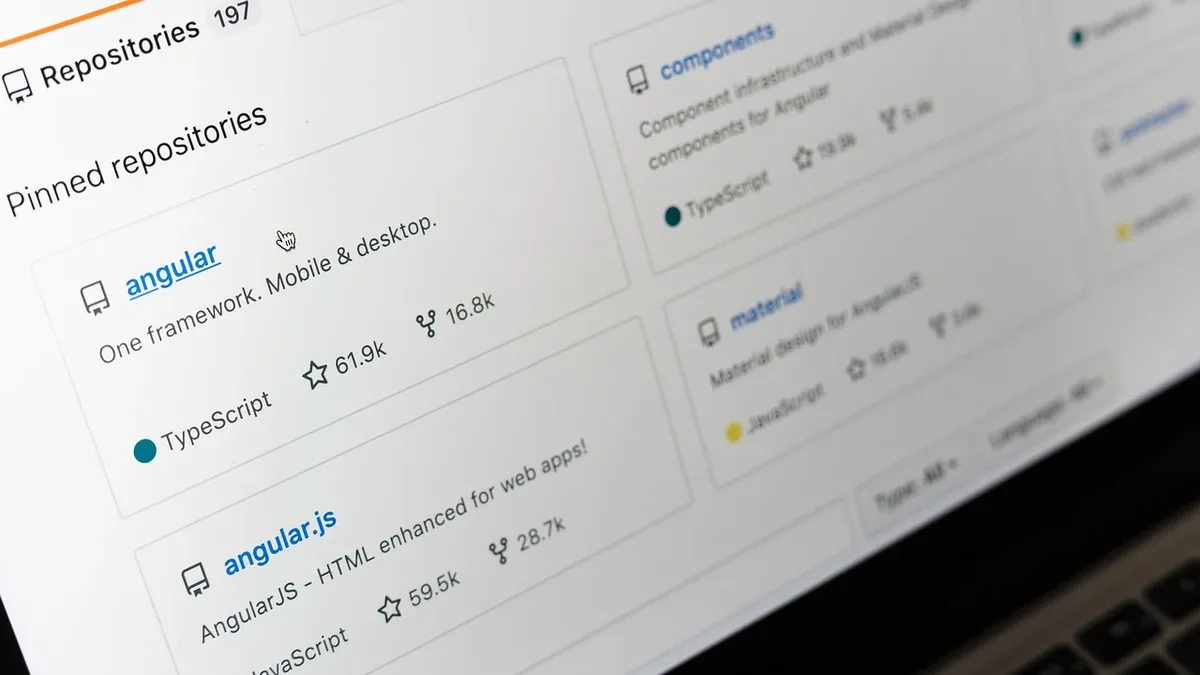
GitHub credential theft campaign plants stealer in CI workflows
Attackers used 4,837 stolen GitHub accounts to test write access on over 61,000 repositories, planting a secret-stealing script in at least 1,806 of...

Iris Plaza Data Breach Exposes 7.7 Million Records
Iris Ohyama disclosed a breach affecting up to 7.7 million customers after unauthorized access to a third-party cloud service used by its Iris Plaza...

OpenSSH sshole vulnerability grants root access on Alpine Linux
A critical OpenSSH flaw, CVE-2026-123158, was exploited within hours of disclosure, allowing remote attackers to log into passwordless accounts on...

AI Agents Breach Indian Organisations, Prompting CERT-In Advisory
India's CERT-In warns AI agents exploited exposed credentials and misconfigured permissions to access live systems and sensitive data at multiple...

ServiceNow Launches AI Passport for Runtime Agent Governance
ServiceNow introduced AI Passport, a cryptographic credential system for runtime governance of AI agents, alongside Shadow AI detection and AI Cost...

Ivanti Connect Secure zero-day chain exploited by UTA0576
Threat actor UTA0576 chained three zero-day flaws, including an unpatched privilege escalation, to achieve unauthenticated root access on fully...