ICS-Sniper Attack Uses Encrypted Traffic to Disrupt Industrial Control
University of British Columbia researchers demonstrated ICS-Sniper, a proof-of-concept attack that can delay critical industrial operations by analyzing metadata in encrypted SCADA communications without breaching plant networks.
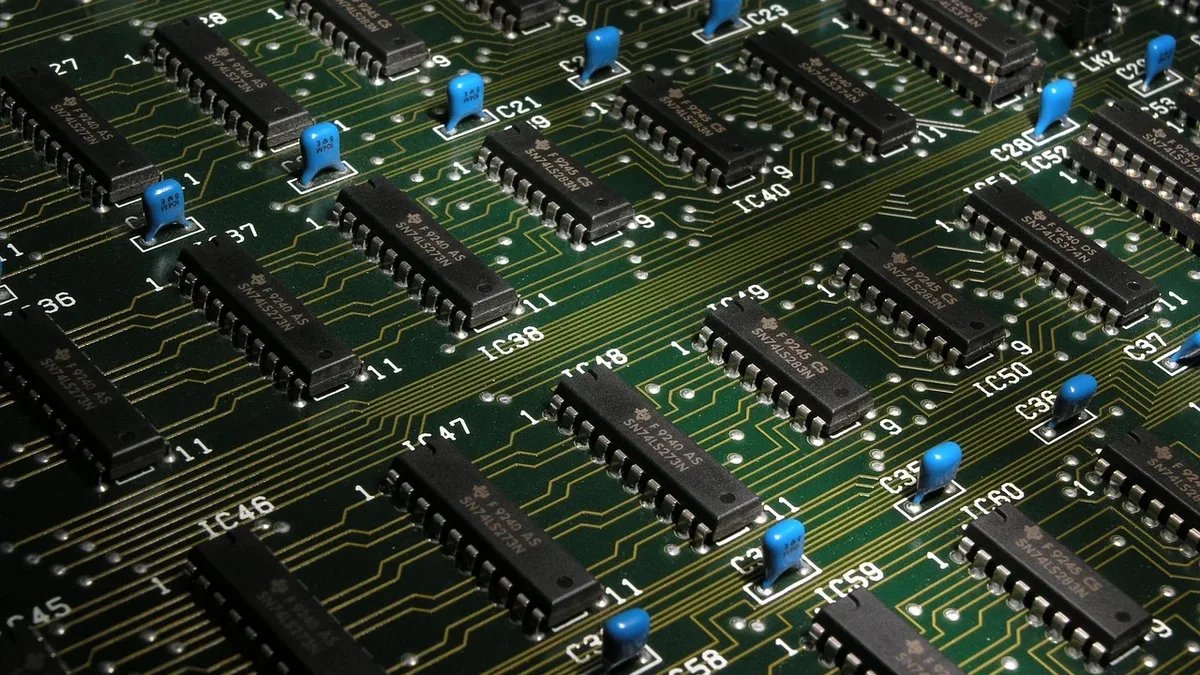
A new attack called ICS-Sniper can disrupt critical industrial operations by analyzing encrypted network traffic, according to researchers at the University of British Columbia. The proof-of-concept targets facilities using cloud-hosted SCADA systems, exploiting metadata in VPN-encrypted communications to predict and sabotage critical commands without entering the plant's own systems.
Industrial control systems rely on computers to run physical machinery such as pumps, valves, and generators. The ICS-Sniper attack targets facilities communicating with cloud-hosted monitoring and control systems over encrypted connections. An adversary must first compromise a router carrying traffic between the facility and the cloud to mount the attack. The attacker then observes metadata such as the timing and size of digital transmissions but cannot read message contents. By analyzing these traffic patterns, the attacker can identify when critical commands or data are likely to be transmitted. ICS-Sniper uses patterns in encrypted communications to predict these critical moments and selectively block a small fraction of messages, disrupting operations.
Experimental results and effectiveness
In laboratory tests, the team demonstrated the attack on a cloud-adapted version of a water-treatment research testbed developed at the Singapore University of Technology and Design. They selected water treatment as their demonstration case because public schematics were available to faithfully replicate the facility’s control systems. Two models of the testbed were used: one built on software-based controllers and the other on standard industrial control hardware. Both models simulated the physical processes of a treatment plant.
In tests on the emulated water treatment testbed, ICS-Sniper delayed the start of clean water pumping by about 15 minutes. In a separate test, the attack kept a valve open more than nine minutes longer than intended. The team also tested their traffic-analysis method across several industrial communication protocols, including a power-grid dataset, though operational disruptions were demonstrated only in the water-treatment models. The attack evaded detectors tested against it during the experiments.
Researchers and defense considerations
The research was conducted by a team from the University of British Columbia. Dr. Gargi Mitra is the first author of the paper and conducted the research as a postdoctoral researcher at UBC. Dr. Aastha Mehta, a UBC computer science professor who leads the Principled Systems Security Group, and Dr. Karthik Pattabiraman, a UBC professor of electrical and computer engineering who leads the Dependable Systems Lab, are co-investigators on the project.
The attack highlights network predictability as a key risk for critical infrastructure. One defence approach involves making network communications less predictable by padding message sizes or adjusting timing. Such countermeasures must preserve the strict timing requirements of industrial equipment, which often depends on deterministic communication cycles.





